
Cine lenses, detailed in manuals, are precision tools for filmmaking, offering nuanced control and optical quality. They differ from photographic lenses, prioritizing smooth operation and consistent performance.
What are Cine Lenses?
Cine lenses, as explained in detailed manuals, are specifically engineered for the demands of professional filmmaking. Unlike standard photographic lenses, they prioritize features crucial for cinematic workflows. These include robust mechanical builds, geared focus and iris rings for precise control, and consistent optical characteristics. Manuals emphasize their ability to maintain a consistent aperture (T-stop) throughout the zoom range, vital for smooth exposure adjustments during shooting.
Cine Lenses vs. Photographic Lenses
Cine lens manuals highlight key distinctions from photographic lenses. Photographic lenses prioritize stopping power (f-stop), while cine lenses use T-stops for accurate light transmission. Cine lenses feature geared rings for follow-focus systems, absent in most photo lenses; Manuals detail cine lenses’ robust builds for studio use, contrasting with photographic lenses’ lighter construction; Finally, cine lenses emphasize consistent image quality across the frame.
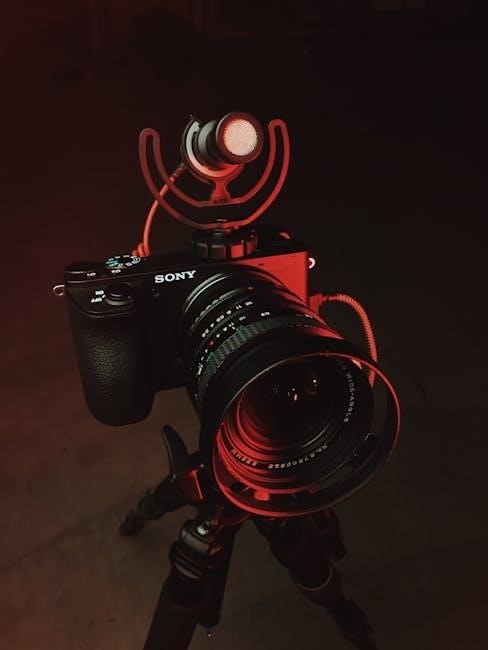
Key Features of Cine Lenses
Cine lens manuals emphasize consistent aperture (T-stops), manual focus with gear rings, and a longer focus throw for precise control during filmmaking workflows.
Consistent Aperture (T-Stops)
Cine lens manuals detail T-stops, unlike photographic f-stops, measuring actual light transmission. This consistency is crucial for smooth exposure changes during filming, avoiding unwanted flares. A T3.1 or T2.2 aperture, as seen in XEEN lenses, provides predictable results. Manuals highlight that T-stops ensure consistent brightness across the frame, vital for seamless editing and maintaining a cohesive visual style throughout a project. This feature is paramount for professional filmmaking.
Manual Focus and Gear Rings
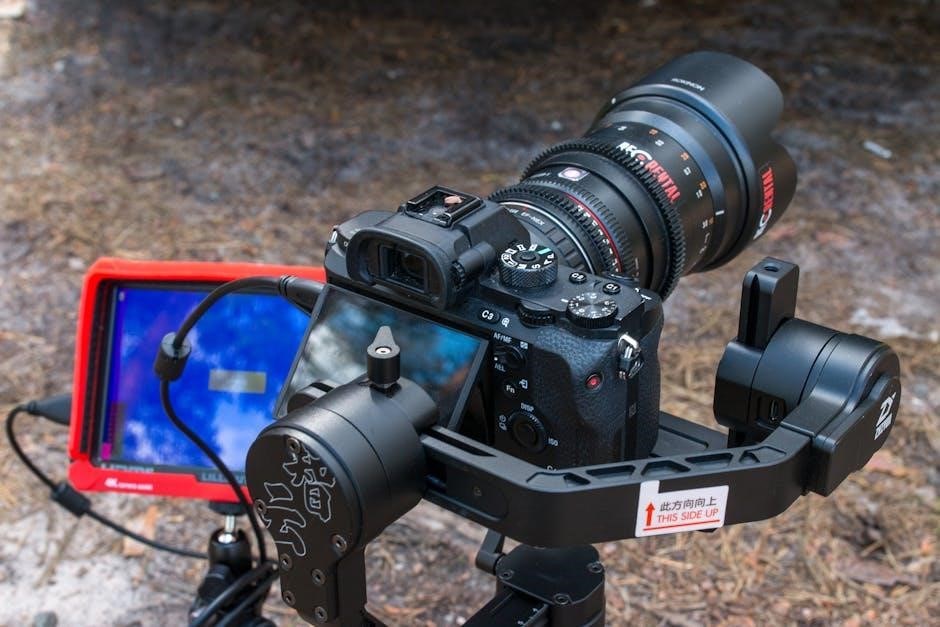
Cine lens manuals emphasize precise manual focus, essential for filmmaking. Gear rings around the focus barrel allow connection to follow focus systems, enabling smooth, repeatable focus pulls. This contrasts with autofocus, offering greater control. Dual Pixel Focus Guides, detailed in manuals, aid accuracy. Manuals explain how these rings provide tactile feedback, crucial for cinematographers needing pinpoint focus adjustments during complex shots, ensuring creative control.
Longer Focus Throw
Cine lens manuals highlight the extended focus throw – the distance the focus ring rotates – for precise adjustments. This allows for gradual, cinematic focus shifts. Manuals detail how this contrasts with shorter throws on photographic lenses. Longer throws facilitate nuanced focus pulls, vital for visual storytelling. They enable focus operators to smoothly transition between subjects, enhancing the cinematic look and feel of footage.

Popular Cine Lens Manufacturers
Cine lens manuals often showcase brands like XEEN, Sigma, and Laowa, known for quality optics and robust builds tailored for professional filmmaking workflows.
XEEN Cine Lenses
XEEN cine lenses, as detailed in their manuals, are recognized for their exceptional image quality and professional features. Notably, XEEN has received a GOOD DESIGN Award. Their lineup includes options like the 135mm F2.0 (T2.2 cine) and 100mm Macro F2.8 (T3.1 cine), available for DSLR and mirrorless systems. These lenses prioritize a cinematic look and reliable performance, making them a popular choice among filmmakers seeking high-quality visuals.
Sigma AF Cine Line
Sigma’s AF Cine Line, explained within their lens manuals, represents a significant innovation – the first autofocus-compatible cine lens series. Built upon the optical foundation of Sigma’s renowned S-series, these lenses blend the convenience of autofocus with the precision demanded by professional filmmaking. This line offers filmmakers a streamlined workflow without sacrificing image quality or cinematic control.
Laowa Cine Lenses
Laowa, as detailed in their comprehensive cine lens manuals, consistently expands its offerings for both cine and broadcast applications. Recent releases include the Sword Full Frame Macro Cine Series and the Ultima Broadcast Zoom for 8K, showcasing their commitment to diverse filmmaking needs. Laowa lenses are known for their unique designs and high optical performance, catering to specialized cinematic visions.
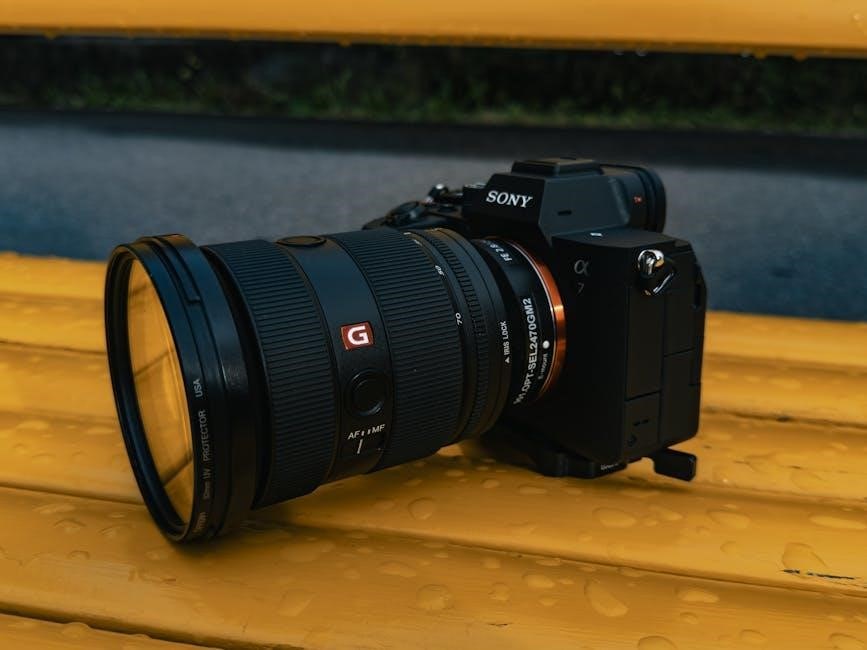
Understanding Lens Specifications
Cine lens manuals detail crucial specs like focal length (14mm-135mm), aperture (T3.1-T1.4), and iris blades (often 11-blade), impacting image characteristics.
Focal Length (14mm, 24mm, 35mm, 50mm, 85mm, 135mm)
Cine lens manuals explain focal length’s impact on field of view and perspective. Wider lenses (14mm, 24mm) capture expansive scenes, while longer ones (85mm, 135mm) compress distance. A 35mm or 50mm offers a natural perspective. Understanding these differences, as detailed in the manual, is crucial for framing shots and achieving the desired cinematic look, influencing depth and composition.
Aperture (T3.1, T2.2, T1.4)
Cine lens manuals emphasize T-stops over f-stops, representing actual light transmission. Lower T-numbers (T1.4, T2.2) allow more light, creating shallower depth of field. A T3.1 aperture offers a balance. Manuals detail how aperture affects exposure and creative control, influencing the image’s brightness and the aesthetic blur, vital for cinematic storytelling.
Iris Blades (11-blade Iris)
Cine lens manuals highlight the importance of iris blade count for bokeh quality. An 11-blade iris, commonly found, creates rounder, more pleasing out-of-focus highlights. Manuals explain how blade number impacts the shape of bokeh, affecting the overall aesthetic. More blades generally yield smoother transitions and a more cinematic look, crucial for visual storytelling.
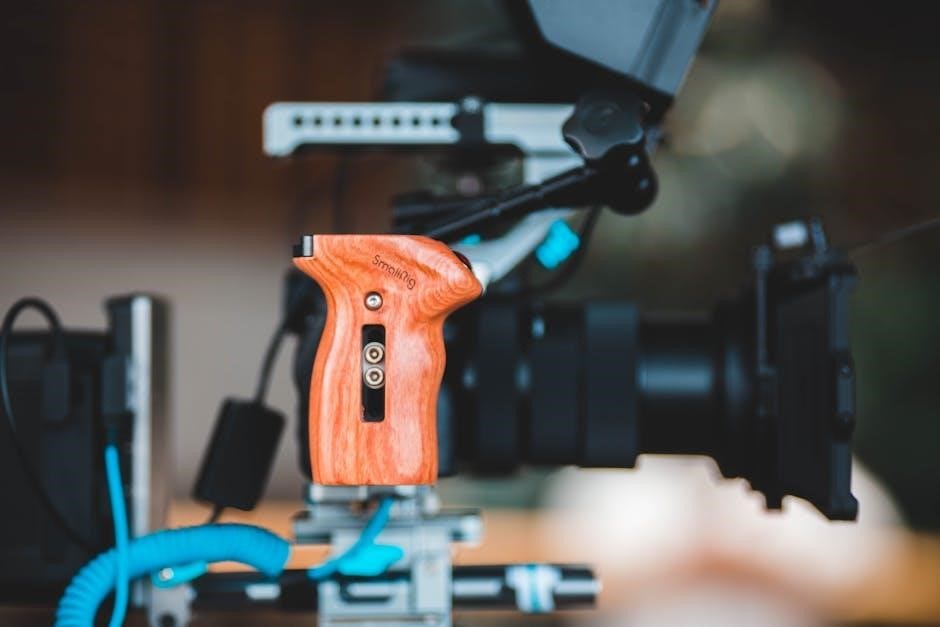
Focusing Techniques with Cine Lenses
Cine lens manuals detail techniques like dual pixel focus guides and focus locking, enabling precise control during filming for creative cinematic adjustments in motion.
Dual Pixel Focus Guide
Cine lens manuals often highlight the Dual Pixel Focus Guide feature, a significant aid for achieving accurate focus. This system utilizes the sensor to provide a real-time focus indication directly in the viewfinder or on the monitor. It enhances precision, especially during manual focusing, allowing filmmakers to visually confirm sharpness. This guide assists in smooth focus transitions and critical focus pulls, crucial for cinematic storytelling, offering a distinct advantage over traditional focusing methods.
Focus Locking and Shifting
Cine lens manuals detail techniques like focus locking and shifting, essential for complex shots. Once Cinematic adjustments are enabled, filmmakers can lock focus on a subject, maintaining sharpness even with camera movement. Shifting allows seamless transitions between subjects, creating dynamic visual narratives. These features, combined with precise manual control, empower cinematographers to craft compelling and visually engaging scenes with deliberate focus changes.
Mounts and Compatibility
Cine lens manuals specify compatibility with various camera mounts, including mirrorless (E-mount, X-mount) and MFT. Adapters expand options for diverse filmmaking setups.
Mirrorless Lens Mounts (E-mount, X-mount)
Cine lens manuals detail compatibility with popular mirrorless mounts like Sony E-mount and Fujifilm X-mount. These systems offer advantages like shorter flange distances, enabling compact lens designs. Manuals often include adapter information for broader camera compatibility. Proper mounting ensures optimal image quality and functionality, crucial for professional filmmaking. Understanding mount specifications, as outlined in the manual, prevents damage and ensures seamless integration with your camera system.
MFT (Micro Four Thirds) Mount
Cine lens manuals frequently address the Micro Four Thirds (MFT) mount, favored for its compact size and cost-effectiveness. Manuals detail specific MFT lens characteristics and potential adapter usage. They emphasize proper mounting techniques to avoid damage. While smaller sensor format, MFT cine lenses deliver excellent image quality. The manual clarifies compatibility with various MFT camera bodies, ensuring optimal performance for filmmakers seeking a lightweight setup.
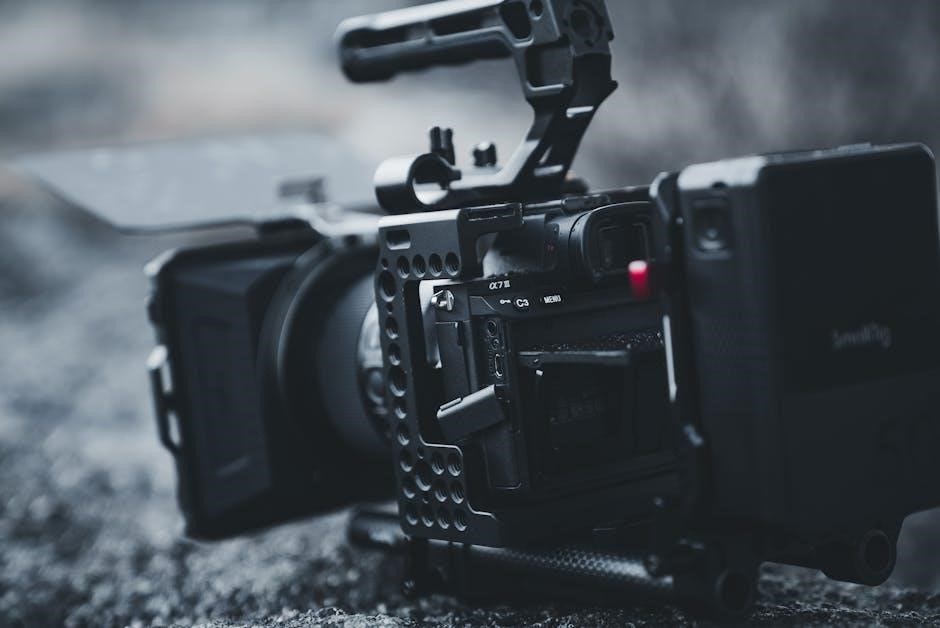
Advanced Cine Lens Features
Cine lens manuals explain features like lens information display and Mod-Auth tamper states (Vista), crucial for professional workflows and data security on set.
Lens Information Display
Cine lens manuals detail how advanced lenses transmit crucial metadata to cameras and monitoring systems. This display includes focal length, aperture (T-stop), and focus distance, streamlining workflows. Modern lenses, as described in documentation, offer real-time data for focus pullers and cinematographers. This feature enhances precision and simplifies complex shots, ensuring consistent results throughout production. Accurate lens data is vital for post-production processes, including visual effects integration and color grading.
Mod-Auth Tamper State (Vista)
Cine lens manuals explain the Vista Mod-Auth system, a security feature detecting unauthorized modifications. Two tamper states exist: critical system file alterations on disk, and potential firmware compromises. The manual details how these states impact lens functionality and data integrity. Addressing these issues often requires contacting the manufacturer for support and potential lens servicing, ensuring continued reliable operation and preventing data corruption.
Cine Lens Accessories
Cine lens manuals highlight essential accessories like matte boxes for light control and follow focus systems for precise manual focusing during filmmaking.
Matte Boxes
Cine lens manuals often detail matte boxes as crucial accessories. These devices attach to the front of a lens, providing a means to control unwanted light and add filters. They feature adjustable blades to create hard or soft edges to shadows, enhancing visual storytelling. Matte boxes also securely hold filters, protecting the lens element and simplifying on-set adjustments for consistent image quality throughout a production. Proper manual setup is key.
Follow Focus Systems
Cine lens manuals emphasize follow focus systems for precise manual focus control. These systems allow an assistant to adjust focus remotely, crucial during filming. They attach to the lens’s gear rings, providing smooth, accurate adjustments. Manuals detail calibration and operation, ensuring seamless transitions between subjects. A quality follow focus enhances cinematic adjustments in motion, vital for professional filmmaking workflows and achieving desired depth of field.
Using Cine Lenses in Filmmaking
Cine lens manuals guide filmmakers in integrating lenses with visual effects and achieving cinematic adjustments. Mastering these tools unlocks creative potential during production.
Visual Effects Integration
Cine lens manuals emphasize how lens data impacts visual effects workflows. Understanding focal lengths, distortion characteristics, and consistent aperture settings (T-stops) is crucial for seamless integration. The Filmmakers Guide to Visual Effects highlights this need for precision. Accurate lens information, often found within the manual, allows VFX artists to track and composite effects realistically, minimizing errors and maximizing visual fidelity during post-production.
Cinematic Adjustments in Motion
Cine lens manuals detail enabling “Cinematic adjustments in Motion” for precise control. This feature allows locking focus on subjects, smoothly shifting focus between them, or fixing it on a specific point. Mastering these techniques, as outlined in the manual, enhances storytelling. Dual Pixel Focus Guide assists, ensuring sharp imagery and creative control during dynamic shots, vital for professional filmmaking.
Macro Cine Lenses
Cine lens manuals highlight specialized macro options like the 100mm F2.8 T3.1 and Laowa’s Sword series, enabling extreme close-up filmmaking with cinematic quality.
100mm Macro F2.8 T3.1 Cine Lens
Cine lens manuals detail the 100mm Macro F2.8 T3.1 as a versatile tool, bridging photography and filmmaking. It offers a true 1:1 magnification ratio for detailed close-ups, crucial for capturing intricate subjects. Manuals emphasize its consistent T-stop, ensuring exposure stability during critical shots. This lens excels in product shots, nature documentaries, and any scenario demanding extreme magnification with a cinematic aesthetic, providing filmmakers with exceptional creative control.
Sword Full Frame Macro Cine Series
Cine lens manuals highlight Laowa’s Sword Full Frame Macro Cine Series as a groundbreaking achievement in close-up filmmaking. These lenses deliver exceptional sharpness and detail, boasting a true macro capability on full-frame sensors. Manuals detail their robust build and precise manual focus, essential for demanding productions. They are ideal for capturing stunning visuals in commercials, music videos, and independent films, offering a unique cinematic perspective.
Broadcast Zoom Lenses
Cine lens manuals detail broadcast zooms like the Ultima 8K, offering versatile focal length control for live production and cinematic projects requiring dynamic framing.
Ultima Broadcast Zoom for 8K
Cine lens manuals highlight the Ultima Broadcast Zoom as a cutting-edge option for 8K workflows. This zoom lens delivers exceptional clarity and precision, crucial for live broadcasts and high-resolution filmmaking. Manuals detail its advanced features, including smooth zoom operation and robust build quality. It’s designed to meet the demanding requirements of professional broadcast environments, offering a versatile solution for various shooting scenarios and ensuring optimal image quality at 8K resolution.
Programming and Cine Lenses
Cine lens manuals often intersect with programming, like Dynamics CRM user creation via OData, requiring careful object release in Excel for efficient workflows.
Dynamics CRM User Creation via OData
Integrating cine lens metadata or control systems with CRM can necessitate programmatic user creation. Utilizing OData, developers can automate account provisioning, though challenges like 500 InternalServerError errors may arise. Debugging requires verifying creator permissions and data consistency. Proper error handling, mirroring manual processes, ensures seamless integration, potentially linking lens serial numbers to user profiles for support tracking and warranty management.
Excel Object Release
Managing cine lens data in Excel often involves COM object interaction. Crucially, releasing these objects—using code like ‘object.Quit’ followed by ‘Set object = Nothing’—prevents memory leaks. Avoid interim variables; direct assignment simplifies release. Failing to properly release Excel objects can degrade performance, especially when processing large lens databases or generating reports from manual specifications.
Armadillo Library Integration
Integrating Armadillo requires specifying include and library directories for compilation, enabling advanced mathematical operations potentially used in cine lens modeling or analysis.
Include Directories
Establishing correct include directories is crucial for successful Armadillo library integration. This involves adding a directory path pointing to Armadillo’s public header files. These headers contain essential function declarations and class definitions needed for utilizing the library’s functionalities within your project. Specifically, you need an additional include directory corresponding to the Armadillo library’s public include directory, ensuring the compiler can locate necessary components.
Library Directories
Configuring library directories is vital for linking against the Armadillo library. This requires specifying a path to the directory containing the compiled Armadillo library files (e.g., .lib or .so). An additional library directory corresponding to Armadillo’s public library directory must be added, enabling the linker to find and incorporate the library’s code during the build process, ensuring proper functionality.
Recent Developments in Cine Lens Technology
New cine lens advancements include autofocus compatibility, like Sigma’s AF Cine Line, and affordable options from Meike, expanding creative possibilities for filmmakers.
AF-Compatible Cine Lenses
Sigma’s AF Cine Line represents a significant leap, bringing autofocus functionality to traditionally manual cine lenses. This innovation blends the precision of cine optics with the convenience of automatic focusing, streamlining workflows for independent filmmakers and smaller crews. Building upon their established photographic lens optical systems, Sigma delivers a unique hybrid experience, offering both manual override and reliable autofocus performance, detailed within the lens manuals.
Meike Cine Lenses (65mm, 85mm)
Meike recently launched manual focus cine lenses, the 65mm and 85mm, featuring a T2.2 aperture, catering to diverse filmmaking needs. These lenses are available in MFT, E-mount, and X-mount, offering broad compatibility. The accompanying cine lens manual details their robust construction and precise mechanics, designed for professional use and cinematic image creation, providing filmmakers with affordable, high-quality options.